
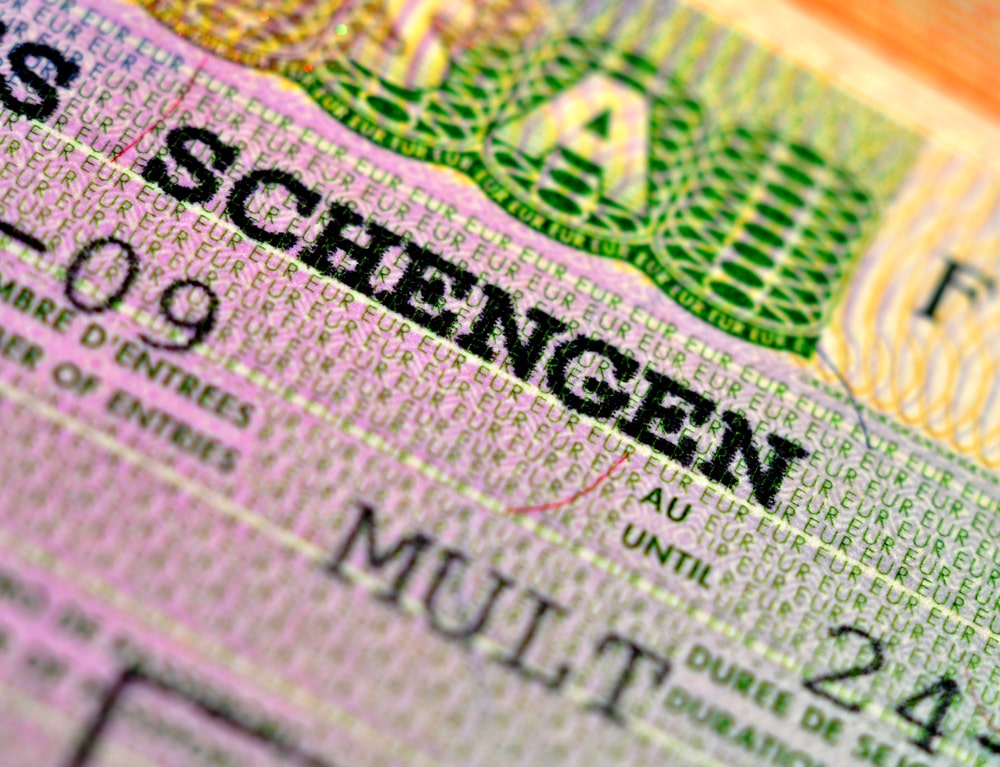
The idea that the EU and the Schengen area are one and the same is a misconception.
Despite the fact that both pertain to cross-country cooperation, there are distinct differences between what constitutes the European Union and the Schengen area.
This article will explain the differences and nuance between these entities and highlight what benefits could be available to you.
What Is the Schengen Zone?
The Schengen Agreement (which is now signed and implemented by 29 European countries, according to SchengenVisaInfo) was first signed in 1985 and fully ratified at the Schengen Convention of 1990.
The Schengen Zone acts as a single jurisdiction that allows travellers to cross borders without stopping for any border checks and therefore enables those who live close to international borders to come and go with ease.
If you are not a citizen or resident of an EU member state or Schengen Zone country, all you need is a Schengen Visa to travel throughout the whole Schengen Area.
You cannot travel to the UK or the Republic of Ireland on a Schengen Visa, but you can enter the non-Schengen microstates of Monaco, San Marino, and Vatican City.
What Is the EU?
The European Union (EU) consists of 27 member states and has existed as it does today since 1993, though its origins are much older. It was created to ensure peaceful, political cooperation and economic prosperity throughout Europe.
The current members of the EU are Austria, Belgium, Bulgaria, Croatia, the Republic of Cyprus, the Czech Republic, Denmark, Estonia, Finland, France, Germany, Greece, Hungary, Ireland, Italy, Latvia, Lithuania, Luxembourg, Malta, Netherlands, Poland, Portugal, Romania, Slovakia, Slovenia, Spain, and Sweden.
If you hold citizenship of a country within the EU, you have the right to live and work in any of the countries above without the need for visas.
What's the Difference Between Schengen Countries and EU Countries?
There are some key differences between the EU and the Schengen Zone, primarily because they do not include all the same member states. There are EU nations that do not belong to the Schengen Zone and vice versa.
A border-free travel area, not a political entity. The European Parliament reserves the power to reject or approve each country's application to join.
A political and economic organization with a democratically elected parliament that includes representatives from all member states.
You can view a full list of all EU and Schengen Area countries below:
Where Is the European Economic Area, and What Is It Exactly?
At High Net Worth Immigration, our clients often ask about the European Economic Area and how it differs from the EU and the Schengen Zone.
The European Economic Area, or EEA, is a third designation within Europe that pertains specifically to the European Union's single market. It includes all the EU countries in addition to members of the European Free Trade Association or EFTA.
The EEA allows Lichtenstein, Norway, and Iceland (EFTA members) to be part of the European single market. Access to the single market enables members of the EEA to trade under EU practices and agreements but allows non-EU member states freedom from certain regulations.
The EEA also incorporates the same freedom of movement policy as the EU and therefore encompasses the expanse of both the EU and the Schengen Zone. Despite not being a member of either EFTA or the EU, Switzerland has its own set of trade agreements that allow it access to the single market.
Automatically in the EEA
EFTA members with EEA single market access
Not in EFTA or EU, but has bilateral trade agreements for single market access
How Does It Work in Practice?
As an EU Permanent Residency (PR) holder, you are permitted to travel throughout the EU as you wish. If your country of choice is both an EU member and participates in the Schengen Zone, your opportunities for visa-free travel extend even further.
If you were, for example, to obtain residency in Greece through its highly attractive Golden Visa Scheme, you could move seamlessly through 27 countries.
You can stay in any Schengen Zone state for up to 3 months out of any 6-month period.
As a legal resident of an EU member state, you are eligible for an EHIC (European Health Insurance Card), which allows you to seek emergency medical treatment during a temporary visit to any member state, except Denmark, at the same cost as in your country of residence.
If healthcare in your country of residence is free at the point of use, it will also be free in other EU member states upon presentation of your EHIC.
Ready to Secure Your Place in Europe?
Whether you are aiming for EU residency through a Golden Visa, exploring your Schengen mobility options, or planning a full citizenship pathway, understanding the difference between the EU, the Schengen Zone, and the EEA is the first step. High Net Worth Immigration specializes in securing European residency permits for investors and their families. We handle every detail of the process, from program selection to permit collection. Contact us for a confidential consultation today.