If you've been hunting for a second passport that pairs Caribbean lifestyle with a tangible, income-producing asset, Antigua and Barbuda keeps coming up for one good reason. Buying property here doesn't just hand you a key to a beachfront villa, it also opens the door to citizenship in a country whose passport gets you into more than 150 destinations visa-free, including the entire Schengen Area, the United Kingdom, Singapore, and Hong Kong.
⚠ Disclaimer
Immigration laws and financial requirements can change anytime, and this article is not intended as legal or financial advice. Before making any decision, please feel free to contact the High Net Worth Immigration team for a free consultation.
What Is the Antigua and Barbuda Real Estate Citizenship Route?
The Antigua and Barbuda Citizenship by Investment Program launched in 2013, and the real estate option is one of four ways to qualify. Instead of writing a non-refundable check to the National Development Fund, you buy property in a government-approved project. After five years, you can sell the asset and recover most or all of your capital, which is why so many high-net-worth investors prefer this route over a straight donation.
The mechanics are simple. The Citizenship by Investment Unit (CIU) keeps a vetted list of approved real estate projects, and you must purchase from that list. Anything off-list, however beautiful, won't count. Once you sign a binding purchase and sale agreement, your file gets submitted to the CIU, you pass due diligence, you complete the funding, and your family receives Antigua and Barbuda passports.
Antigua and Barbuda is currently one of the most crypto-friendly Caribbean CBI jurisdictions, with the government supporting blockchain-related licensing and digital asset innovation.
For investors holding a meaningful chunk of their wealth in digital assets, that matters. It's also one of the most generous programs for large families, parents, grandparents over 55, unmarried siblings of any age, and dependent children up to age 30 can all be included on a single application.
Minimum Real Estate Investment for Antigua Citizenship in 2026
The minimum real estate investment for Antigua citizenship is USD 300,000 in a government-approved project, and you must hold that property for at least five years before selling. This threshold was established under the Citizenship by Investment (Amendment) Regulations 2024. While the Eastern Caribbean signed a regional Memorandum of Agreement (MOA) in 2024 to harmonize CBI minimum investments at a $200,000 floor, Antigua and Barbuda specifically set its real estate threshold at $300,000 to ensure premium asset quality.
Two important nuances most articles gloss over.
First, there's a joint investment option. Two unrelated applicants can co-purchase a single approved property, with each contributing at least $300,000. So if a property is listed at $600,000, two qualifying investors can split it and each gets independent citizenship rights, which is useful for business partners or extended family arrangements.
Second, the $300,000 is just the asset. It does not include government processing fees, due diligence fees, professional service fees, taxes, or transaction costs. We'll break those down in a minute.
Antigua and Barbuda Citizenship by Investment 2026 Requirements
To qualify under the real estate route, the main applicant must:
- ✓
Be at least 18 years old
- ✓
Hold a clean criminal record (some minor convictions are reviewed case-by-case)
- ✓
Pass enhanced due diligence and a mandatory virtual interview, required since November 2023 for applicants and dependents 16 and older
- ✓
Provide verifiable proof of legal source of funds
- ✓
Be in good health, confirmed by a medical certificate
- ✓
Sign a binding purchase agreement on a CIU-approved project
- ✓
Reside in Antigua and Barbuda for a cumulative minimum of 30 days during the first five years after citizenship is granted (updated under ECCIRA standards)
That 30-day stay is the only physical presence requirement, and it can be spread across multiple short visits or accumulated over the five-year period. There's no language test, no history exam, and no requirement to relocate.
You also cannot apply on your own. Antiguan law requires every CBI application to be submitted through a licensed local agent or an authorized international representative working with one. This is a feature, not a bug, the agent absorbs your initial due diligence load and acts as your interface with the CIU.
Whatever your situation, book a free and confidential meeting today. High Net Worth Immigration brings 15+ years of experience helping clients secure second passports, residency, and cross-border asset protection.
Step-by-Step: How to Get Antigua Citizenship Through Real Estate Investment
This is where most guides get vague. Here's the actual sequence, in the order it happens.
Pick Your Licensed Agent and Run a Pre-Assessment
Before you even look at properties, you sit with a licensed agent for a confidential pre-assessment. They'll do a Know Your Client (KYC) review, check your background, examine source-of-funds documentation, and confirm everyone you want to include qualifies. A good agent will tell you up front if anything in your file is going to trip the CIU's enhanced due diligence so you can fix it or pick a different program. Expect this stage to take one to two weeks if your documents are clean.
Choose an Approved Real Estate Project
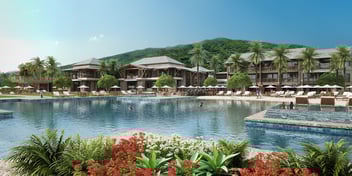
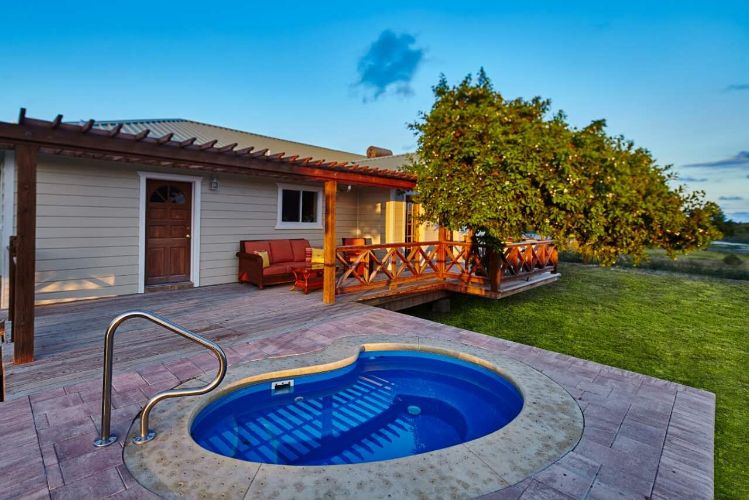
Now you select from the list of approved real estate projects in Antigua. Top areas where most CBI-qualifying inventory sits include Jolly Harbour on the west coast, Nonsuch Bay on the east coast, Verandah Estates on Long Bay Beach, Hodges Bay, and Tamarind Hills. The choices generally fall into two buckets: branded resort residences, which are fully managed and hands-off, and standalone luxury villas, which offer more upside on appreciation but more management responsibility.
Sign the Purchase and Sale Agreement
You execute a binding purchase and sale agreement with the developer, contingent on your citizenship being granted. At this point you're not transferring the full purchase price, only a refundable deposit, typically 10 percent, goes into escrow. If your application is denied, the deposit comes back to you.
Compile Documents and Submit to the CIU
Your agent assembles the full file: notarized passports, police clearance certificates from every country you've lived in for six months or more since age 18, marriage and birth certificates, financial statements, source of funds documentation, medical exams, and the signed purchase agreement. Every document must carry an apostille seal. At submission, you pay the due diligence fees and 10 percent of the government processing fee.
Due Diligence and Mandatory Interview
The CIU runs a multi-tier due diligence check, including international database screening, in-country investigation, and the now-mandatory virtual interview. The interview is conducted in English, or your native language with a translator, and covers your background, source of wealth, and intent. The Antigua and Barbuda CBI program maintains an estimated rejection rate of around 2 to 3 percent, low enough to indicate the program is well-regulated, high enough to confirm the screening is real.
Receive Approval and Complete the Investment
Once the CIU issues your approval letter, you have 30 days to fund the rest of the investment, the balance to the developer, the remaining 90 percent of the government processing fee, and any outstanding professional fees. Title is registered in your name, or in a holding company you set up, which is permitted.
Take the Oath and Collect Passports
You can take the oath of allegiance either in Antigua or at any Antiguan consulate or high commission worldwide. Once that's done, your passports are issued, typically within a few weeks. From start to finish, the process now runs three to six months in normal conditions, though processing has been backed up at times in 2025, so build in a buffer.
Cost Breakdown: Antigua Citizenship by Investment Hidden Costs
The headline number is $300,000, but the all-in cost is meaningfully higher. Here's a realistic 2026 cost table for a family of four taking the real estate route.
| Cost Component | Amount (USD) |
|---|---|
| Approved real estate purchase (minimum) | $300,000 |
| Government processing fee for Real Estate (family of 4 or fewer) | $20,000 |
| Each additional dependent (Real Estate processing fee) | $10,000 |
| Due diligence — main applicant | $8,500 |
| Due diligence — spouse | $5,000 |
| Due diligence — dependents 12 to 17 | $2,000 each |
| Due diligence — dependents 18 and over | $5,000 each |
| Passport issuance fee | ~$300 / person |
| Property transfer tax (negotiable on some projects) | 2.5–7.5% |
| Legal and agent professional fees | $15,000 – $30,000 |
| Apostille, translations, courier, medicals | $1,500 – $3,000 |
| Total estimated all-in cost (family of four) | $355K – $385K |
For a family of four, expect total costs in the range of $355,000 to $385,000 before you account for any furniture or property upgrades. For a single applicant, you're closer to $335,000 to $345,000 all-in.
The professional fees vary widely between agents, so get two or three quotes. The transfer tax is sometimes negotiated down by approved developers as part of the package, ask about this before signing.
ROI: What You Can Realistically Expect from Antigua Real Estate Investment
This is where investors pay attention. Antigua and Barbuda real estate isn't a get-rich-quick play, but it's also not a cost. Here's the honest ROI picture, with important risk considerations.
Rental yield. If you place your villa in a managed rental pool, expect annual yields in the range of 3.5 to 5 percent depending on the project and management quality. Verandah Estates, for example, targets approximately 3.5 percent annually with their managed program. Beachfront luxury rentals in peak season can pull premium rates, but vacancy in low season pulls the average down.
Capital appreciation. Antiguan property values have generally appreciated 3 to 5 percent annually over the last decade, with select areas like Long Bay and Jolly Harbour outperforming. The five-year hold gives appreciation time to compound.
Exit. After year five, you can sell the property to another CBI applicant or on the open market. Some developers, including Elite Island Resorts at Verandah Estates, build in target resale prices and waive resale commissions if the target isn't met, which provides a useful floor.
Tax efficiency. Antigua and Barbuda imposes no personal income tax, no capital gains tax, no inheritance tax, and no wealth tax on individuals. Real estate tax is just 0.1 to 0.5 percent of property value annually. If you eventually become a tax resident under the 183-day rule, the tax shelter widens further to dividends, interest, and royalties.
⚠️ Important Risk Disclosure: Real estate investments carry inherent risks including market volatility, liquidity constraints, developer performance, and changing regulations. The yields and appreciation figures shown are historical estimates and not guaranteed future returns. Actual results may vary significantly based on property selection, management quality, and market conditions. This is not financial advice.
Real Estate vs Donation: Which Route Makes More Sense?
The National Development Fund donation route starts at $230,000 and is genuinely simpler. There's no property selection, no rental pool, no five-year holding period, and no eventual sale. You write the check, you get the citizenship. But you also never see that money again.
Real Estate Route
Tangible asset. Five-year hold. Resaleable to next CBI applicant. Generates rental income (3.5–5% annually, not guaranteed). Net cost over five years can be near-zero or positive after appreciation and yield.
BEST FOR: HNWIs with a 5+ year horizon who want capital recovery and lifestyle utility.
NDF Donation
Direct contribution to the National Development Fund. Faster (3–4 months). Zero ongoing involvement. No property to manage, no resale risk. But the capital is gone the moment it clears.
BEST FOR: Investors prioritizing speed and simplicity over capital recovery.
The real estate route costs you about $80,000 more upfront in the qualifying investment and government fees, plus modestly higher legal and transaction fees. In return, you get an asset that should be worth roughly the same or more at year five, plus rental income along the way. If the property appreciates even 3 percent a year and you collect 4 percent in rents, your effective net cost over five years is dramatically lower than a donation, and could even be net positive.
Rule of thumb: if you have the capital and don't mind a five-year horizon, real estate wins on economics. If you want speed and zero ongoing involvement, the NDF donation is cleaner.
Best Areas to Buy Property in Antigua for Citizenship
The approved project list shifts periodically as new developments come online, but the established areas remain the most reliable.
Jolly Harbour
West coast. Largest planned community on the island. Marina, golf course, restaurants, supermarket. Strong rental demand from expats and corporate executives year-round.
Nonsuch Bay
East coast. Caters to luxury buyers with sailing and a quieter, more secluded feel. Higher entry prices, premium clientele.
Verandah Estates · Long Bay
25-acre gated community next to Verandah Resort & Spa. Freehold villas, optional rental program, professional management by Elite Island Resorts. Long Bay regularly ranks among Antigua's finest beaches.
Tamarind Hills
Cliffside properties with dual-bay views. More boutique, more design-forward. Architecturally distinct and visually striking.
Hodges Bay
North of the island near the airport. Convenient for short visits, mature community, private island club. Strong infrastructure for short-term stays.
Mid-tier Branded Resorts
Several CIU-approved resort residences offer share-based participation from around $300K. Hands-off, predictable, lower hassle than standalone villas.
When evaluating any of these, ask three questions: Is the project on the current CIU-approved list, not a list from 2022? Is there a working rental program with a track record? And what's the realistic exit strategy after year five?
Family Inclusion: Who You Can Add to Your Application
This is one of the strongest features of the Antiguan program. A single application can include:
- ✓
The main applicant
- ✓
Spouse
- ✓
Children under 30, financially dependent on the main applicant or spouse
- ✓
Children of any age who are physically or mentally challenged
- ✓
Parents and grandparents aged 55 and older
- ✓
Unmarried siblings of any age, including the spouse's siblings
You can also add new dependents, a future spouse or future children, after citizenship is granted, which is unusual among CBI programs and a meaningful long-term planning advantage.
Visa-Free Travel and Other Benefits in 2026
Holding an Antigua and Barbuda passport gives you visa-free or visa-on-arrival access to over 150 destinations. The headline ones for most investors:
- ✓
The full Schengen Area, 90 days in any 180-day period
- ✓
The United Kingdom, six months
- ✓
Singapore, Hong Kong, and most ASEAN nations
- ✓
Russia, Brazil, and most of Latin America
You don't get visa-free entry to the United States. Furthermore, as of early 2026, the U.S. State Department has reduced the validity of B-1/B-2 visitor visas for Antiguan citizens to just 3 months (down from the previous 10 years) and has placed the country on the Visa Bond Pilot Program, which may require a refundable $15,000 bond per application. Antigua is also a Commonwealth member, which carries certain reciprocal privileges in the UK and other Commonwealth countries.
Frequently Asked Questions

Vicky Katsarova is an internationally recognized advisor in residency and citizenship by investment, with more than 15 years of experience helping investors, entrepreneurs, and families secure strategic residency and citizenship solutions.
Since founding High Net Worth Immigration in 2010, she has advised clients across more than 20 jurisdictions, helping them enhance global mobility, protect family wealth, diversify geopolitical risk, and unlock international opportunities through carefully selected investment migration programs.
Having lived in Bulgaria, the UAE, and Canada, Vicky combines professional expertise with personal international experience. Her boutique advisory is built on discretion, integrity, and long-term client relationships, delivering tailored solutions aligned with each client's unique objectives.
Member of the Uglobal Writers Council | Contributor to UNIQUE Private Jet Magazine | Featured in CIVITAS POST's "Leading Women" & Women's Journal