
Since the passage of the EB-5 Reform and Integrity Act (RIA) in 2022, new opportunities have opened up for EB-5 investors. Currently, the two most popular categories are EB-5 Rural Projects and EB-5 High Unemployment Area (HUA) Projects.
By investing in either of these options, you can get a U.S. Green Card along with several unique benefits. However, the big question is: Which project is better for you based on your background and goals?
⚠ Disclaimer
Immigration laws and financial requirements change frequently. This article is for informational purposes only and does not constitute legal or financial advice. Before making any decisions, please consult a qualified professional or reach out to the High Net Worth Immigration team for a free, up-to-date consultation.
1. Investment Amount
For a standard or non-TEA EB-5 project, the minimum investment amount is $1,050,000.
However, because both Rural and HUA projects are located in a Targeted Employment Area (TEA), the required investment drops to $800,000. This means both options save you $250,000 right from the start, making it much more affordable for investors.
2. Reserved Visas (Set-Aside Visas)
Visa quotas and backlogs play a massive role in how fast you can get a Green Card. Under the 2022 RIA law, special visas are set aside for both categories every year:
- Rural Projects: 20% of all EB-5 visas are reserved specifically for rural projects.
- HUA Projects: 10% of all visas are reserved for high unemployment area projects.
Because rural projects get double the reserved visas, investors from high-demand countries like India, China, or Vietnam face a much lower risk of long waiting times (visa retrogression). On the other hand, because HUA projects have fewer reserved visas, more applicants could lead to longer delays.
3. Processing Speed (Priority Processing)
If you want to get your Green Card faster, a Rural Project is your best choice. Under new USCIS rules, rural project applications (such as Form I-526E) receive Priority Processing, meaning the government reviews them much faster.
On the other hand, while HUA projects do offer reserved visas, they do not get this fast-track priority processing. As a result, the total time it takes to receive your Green Card is usually much shorter with a rural project.
4. Project Location and Type
Your choice between the two depends on which location and type of business environment you feel most comfortable with.
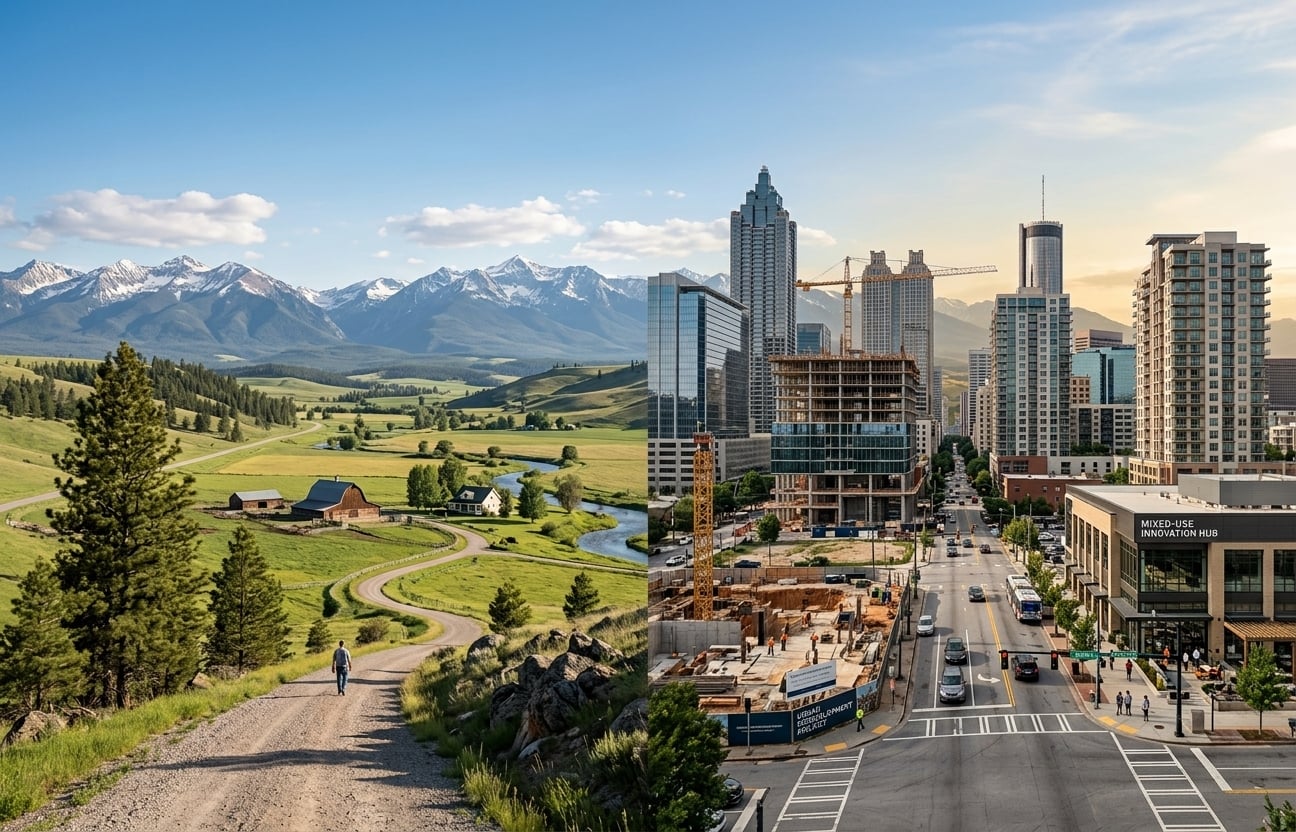
- HUA Projects: These are usually located in big cities or urban areas where the unemployment rate is at least 150% of the national average. Typical examples include large real estate developments, luxury hotels, or major commercial projects. This option is great if you prefer investing in prime city-center locations.
- Rural Projects: These projects must be located outside big cities (outside a Metropolitan Statistical Area) and in towns with a population of less than 20,000. They usually focus on farming, tourism, renewable energy, or rural infrastructure.
5. Job Creation Requirement
Just like any EB-5 project, both Rural and HUA options require your investment to create at least 10 full-time jobs for qualified U.S. workers.
If you invest through a Regional Center, you get a huge advantage: both direct jobs (people working directly for the project) and indirect jobs (jobs created in the surrounding local economy) count toward that 10-job requirement.
6. Risks and Things to Consider
Before investing, it is important to understand a few potential risks:
- Changes in HUA Status: Unemployment rates in city areas can change over time. It is crucial to make sure the area is officially recognized as an HUA when you file your application. In contrast, rural boundaries are generally fixed and do not change quickly, making them more stable.
- Project Credibility: Before choosing any project, you should check the track record, reputation, and financial transparency of the Regional Center managing it.
- Capital at Risk: Under U.S. immigration law, your investment money must genuinely be "at risk." This means no EB-5 project can legally guarantee that you will get your money back, and normal business risks will always apply.
EB-5 Rural Project vs. EB-5 HUA Project: Which One Is Best for You?
When you weigh all the facts, the EB-5 Rural Project currently offers bigger advantages for getting your immigration approved quickly. It gives you a double benefit: a 20% reserved visa quota and Priority Processing, which helps you get your Green Card much faster with fewer delays. This makes it a great choice for investors from countries with long waiting times.
However, if you feel more comfortable investing in a big city project like a commercial building or major real estate development, and care deeply about the project's long-term financial returns, HUA Project can still be an excellent option after proper research and careful planning.

Vicky Katsarova is an internationally recognized advisor in residency and citizenship by investment, with more than 15 years of experience helping investors, entrepreneurs, and families secure strategic residency and citizenship solutions.
Since founding High Net Worth Immigration in 2010, she has advised clients across more than 20 jurisdictions, helping them enhance global mobility, protect family wealth, diversify geopolitical risk, and unlock international opportunities through carefully selected investment migration programs.
Having lived in Bulgaria, the UAE, and Canada, Vicky combines professional expertise with personal international experience. Her boutique advisory is built on discretion, integrity, and long-term client relationships, delivering tailored solutions aligned with each client’s unique objectives.
Member of the Uglobal Writers Council | Contributor to UNIQUE Private Jet Magazine | Featured in CIVITAS POST's “Leading Women” & Women's Journal