
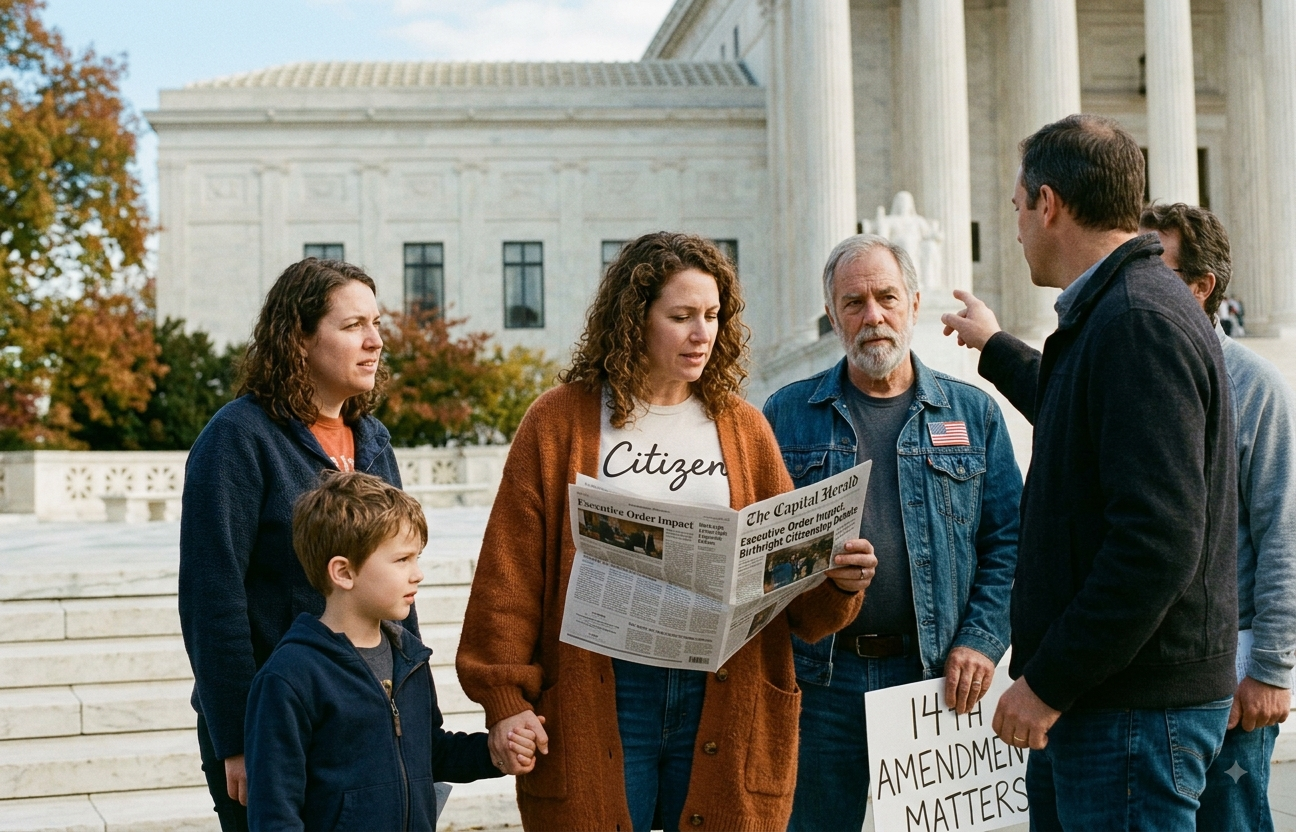
For generations, the 14th Amendment and the concept of birthright citizenship have represented a doorway of opportunity for immigrants around the world. It's a guarantee that anyone born on American soil automatically becomes a US citizen and stands as a cornerstone of the American Dream.
On August 6, 2026, President Donald J. Trump signed two executive orders, which directly challenge this long-standing principle.
Coming just weeks after a strict Supreme Court decision, can the Trump administration actually overturn a constitutional right? Or is this simply a strategic political move?
⚠ Disclaimer
Immigration laws and financial requirements change frequently. This article is for informational purposes only and does not constitute legal or financial advice. Before making any decisions, please consult a qualified professional or reach out to the High Net Worth Immigration team for a free, up-to-date consultation.
Historical and Constitutional Background
Ratified in 1868 after the Civil War, the 14th Amendment clearly states that anyone born in the US and "subject to the jurisdiction thereof" is a citizen. The only exception applied to children of foreign diplomats, who are exempt from US law due to diplomatic immunity.
Landmark Case · 1898
The biggest milestone for this law came with the landmark 1898 case, United States v. Wong Kim Ark. The Supreme Court ruled that Ark, born to Chinese parents, was a citizen regardless of his parents' legal status.
Fast forward to today, and that same principle has become a lightning rod. Whether children of undocumented immigrants or temporary visa holders should automatically get citizenship is now a deeply divided political fight, driving the current debate.
First Attempt to Cancel Birthright Citizenship
On January 20, 2025, his very first day in office, President Trump signed an executive order attempting to end automatic birthright citizenship for the children of undocumented or temporary residents. However, following lawsuits from civil rights organizations, the Supreme Court struck down the order as unconstitutional in a 6-3 decision in 'Trump v. Barbara' on June 30, 2026.
Chief Justice John Roberts
Chief Justice John Roberts noted in the opinion that "there is remarkably little support for this dramatic revisionist view," upholding birthright citizenship based on the 1898 precedent.
Conservative Justice Brett Kavanaugh
Conservative Justice Brett Kavanaugh concurred, though he grounded his reasoning in existing statutory law rather than constitutional grounds. After the July deadline to request a rehearing passed, the Trump administration shifted tactics and pursued a narrower path.
August 6, 2026 Executive Orders Signed by President Trump
Rather than taking on the 14th Amendment head-on, the new executive orders attempt to narrow the phrase "subject to the jurisdiction thereof" by carving out four specific exceptions to birthright citizenship:
Denying citizenship to children born to parents designated as members of foreign terrorist organizations or hostile entities.
Expanding the traditional diplomatic exemption beyond top ambassadors to include embassy staff, consular workers, and foreign lobbyists.
Targeting children born through paid arrangements or birth tourism, where travel or surrogacy is arranged specifically so the child is born on US soil.
Applying to children born in US territories where Congress has not explicitly granted birthright citizenship by statute, primarily American Samoa.
⚠️ Administrative Action
The order directs federal agencies to withhold passports and citizenship documents from children in these groups, effectively using administrative policy to narrow the reach of a constitutional right.
Executive Order Focused on Stopping Birth Tourism
The second executive order specifically targets "birth tourism," or tourists traveling to the US for the purpose of giving birth. State Department and Department of Homeland Security (DHS) have been instructed to revoke non-immigrant visas or deny entry at the border to anyone whose primary reason for travel is to give birth on American soil.
💡 Expert Perspective
Many legal experts point out that birth tourism is an exaggerated issue, affecting only a few thousand visitors each year. Since current visa regulations already contain provisions to curb the practice, this new directive functions mostly as a symbolic show of force.
What supporters and critics are saying
👍 Supporters
Support for the new orders gathered steam quickly. White House Deputy Chief of Staff Stephen Miller argues that the 14th Amendment was only meant for formerly enslaved people after the Civil War, so applying it to modern immigrants makes no sense. The administration insists these steps are necessary to close loopholes and protect national security.
👎 Critics
Critics, however, are furious on the other hand. Civil rights groups call the move a sly, desperate attempt to end-run around the Supreme Court.
So What Comes Next?
The legal process began almost immediately.
📅 August 11, 2026
On August 11, 2026, civil rights groups filed a motion in a New Hampshire federal court seeking to block the orders, relying on established Supreme Court precedents protecting birthright citizenship.
The two orders may follow different legal paths. The measures targeting birth tourism could have a stronger chance of surviving, given the president's broad authority over visas and entry into the United States. The attempt to restrict birthright citizenship, however, faces significant constitutional challenges and will likely return to the Supreme Court for further review.
🗳️ Looking Ahead
With the November 2026 midterm elections approaching, the debate will remain both legal and political. While the outcome is uncertain, the strength of the constitutional framework and the role of judicial review provide reassurance that any changes will be carefully examined before they can take effect.
A Secure and Legal Path to U.S. Permanent Residence
As the future of birthright citizenship continues to be debated, families planning their future in the United States may wish to explore established legal immigration pathways that offer greater clarity and security.
EB-5 Investor Visa provides eligible investors and their qualifying family members with a structured route to permanent residence in the United States through investment and job creation.

Vicky Katsarova is an internationally recognized advisor in residency and citizenship by investment, with more than 15 years of experience helping investors, entrepreneurs, and families secure strategic residency and citizenship solutions.
Since founding High Net Worth Immigration in 2010, she has advised clients across more than 20 jurisdictions, helping them enhance global mobility, protect family wealth, diversify geopolitical risk, and unlock international opportunities through carefully selected investment migration programs.
Having lived in Bulgaria, the UAE, and Canada, Vicky combines professional expertise with personal international experience. Her boutique advisory is built on discretion, integrity, and long-term client relationships, delivering tailored solutions aligned with each client’s unique objectives.
Member of the Uglobal Writers Council | Contributor to UNIQUE Private Jet Magazine | Featured in CIVITAS POST's “Leading Women” & Women's Journal