
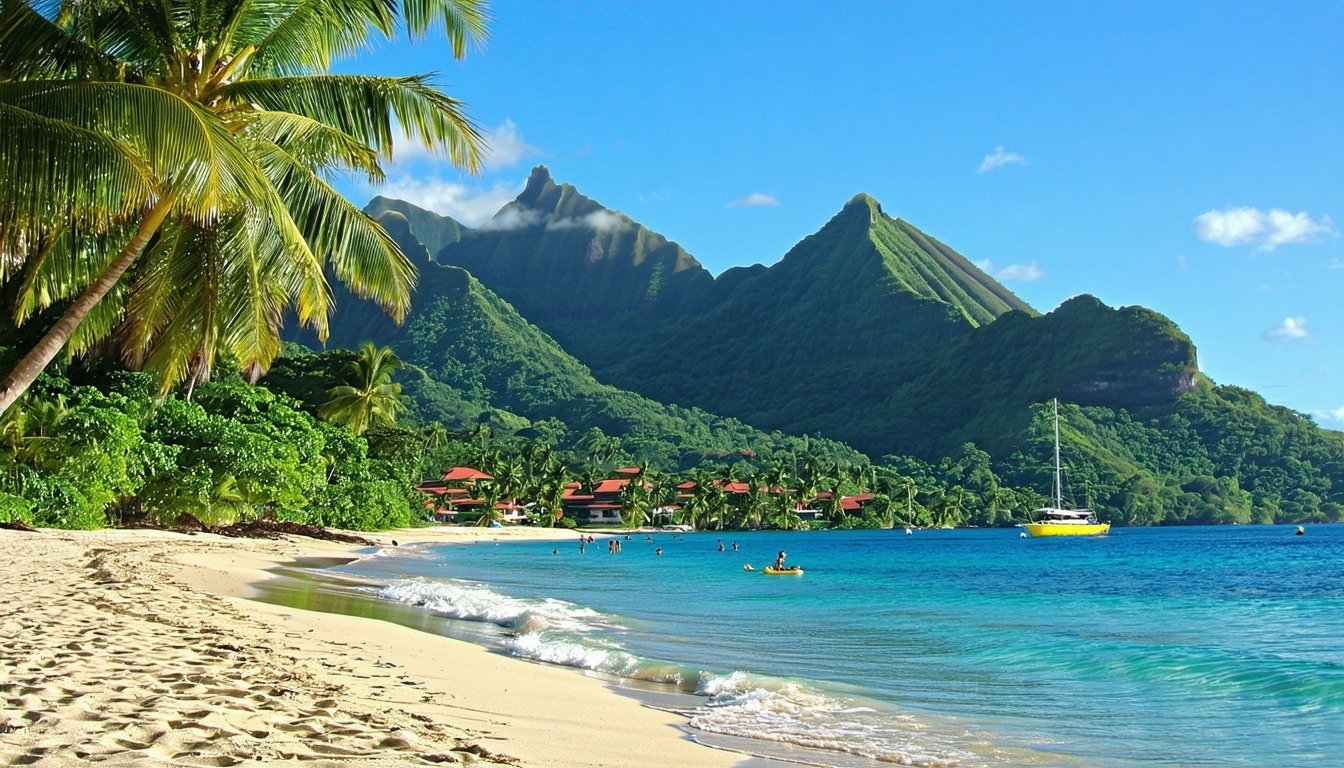
The Commonwealth of Dominica has run one of the world's longest-standing citizenship by investment programs since 1993, and in 2026 it remains the most cost-efficient gateway to a respected second passport in the Caribbean. For high net worth investors weighing global mobility, tax structuring, and a credible Plan B for their families, the Dominica CBI program continues to deliver on speed, cost, and family inclusion in ways no other Caribbean jurisdiction quite matches.
⚠ Disclaimer
Immigration laws and financial requirements can change anytime, and this article is not intended as legal or financial advice. Before making any decision, please feel free to contact the High Net Worth Immigration team for a free consultation.
That said, 2026 has not been a quiet year. The United States introduced a partial entry suspension affecting Dominica nationals on January 1, the proposed regional regulator ECCIRA is finally moving from draft to law, and the planned 30-day physical presence rule has been pushed to mid-2026. Iranian applicants have been formally suspended since March, and the Citizenship by Investment Unit (CBIU) has tightened its compliance posture in line with FATF expectations.
Dominica Citizenship by Investment at a Glance
Before going deep, here is the snapshot you can hand to your family office or private banker.
| Item | 2026 Position |
|---|---|
| Year established | 1993 |
| Minimum investment (single applicant) | US$200,000 |
| Investment routes | Economic Diversification Fund or government-approved real estate |
| Real estate hold period | 3 years (5 years if reselling to another CBI applicant) |
| Processing time | 4 to 6 months on average, longer for complex files |
| Physical residency required | None at present (30-day rule expected mid-2026 onward) |
| Personal interview | Mandatory, virtual, for all applicants 16 and over |
| Passport validity | 10 years |
| Visa-free or visa-on-arrival access | Roughly 140 to 145 countries, including the Schengen Area, Singapore, Hong Kong, and China |
| Dual citizenship | Permitted without restriction |
| US travel impact | B-1/B-2 visa now 3-month single entry; F, M, J visas suspended for new applicants |
What the Dominica Citizenship by Investment Program Actually Is
The program is a statutory route to full Dominican citizenship, codified under Section 101 of the Constitution of Dominica and Sections 8 and 20 of the Citizenship Act. Authority to grant citizenship sits with the Minister of Finance, supported by the Citizenship by Investment Unit, a dedicated body inside the Ministry of Finance that screens, processes, and recommends every application.
The CBIU does not deal directly with applicants. All files must come through an Authorised Agent licensed by the Government of Dominica, and those agents work under a three-tier system that places ultimate accountability at the top.
This structural separation is one reason the program has held up under increasing international scrutiny while several less rigorous jurisdictions have been forced into reform.
A successful applicant receives a Certificate of Naturalisation, which is the legal anchor for the Dominica passport. Citizenship is hereditary, can be passed to descendants, and sits comfortably alongside any other nationality, since Dominica imposes no restriction on holding multiple passports.
Why Dominica Still Earns a Place in a Serious Investor's Portfolio
For investors who already hold one or two passports, the question is rarely whether to add a Caribbean citizenship, but which one to pick. Dominica earns its slot for four reasons that have grown more relevant in 2026, not less.
Price Discipline
The minimum threshold of US$200,000 is the entry-level cost across the harmonized Caribbean Five (Antigua and Barbuda, Dominica, Grenada, Saint Kitts and Nevis, Saint Lucia), but Dominica's family pricing remains the most efficient. A main applicant with three qualifying dependents pays US$250,000 to the Economic Diversification Fund, a number that is hard to beat anywhere else in the region for what you receive.
Institutional Maturity
Three decades of continuous operation, mandatory interviews since 2023 (Dominica was the first in the Caribbean to require them), a Financial Intelligence Unit established in October 2024, and a four-tier due diligence framework aligned with FATF Recommendations 10 and 22 give the program something newer competitors cannot offer: a track record.
Structural Privacy & Convenience
There is no language test, no residency obligation today, no requirement to ever visit the island, and the entire process can be completed remotely. For an investor balancing operations across multiple time zones, that operational lightness has real value.
Broader Strategic Fit
Dominica passport holders gain practical mobility into the Schengen Area, Singapore, Hong Kong, China, and roughly 140 other destinations. Combined with a tax regime that does not tax non-resident worldwide income, capital gains, wealth, or inheritance, the citizenship slots cleanly into legitimate cross-border planning.
Whatever your situation, book a completely free and confidential meeting today. High Net Worth Immigration brings 15+ years of experience helping clients secure second passports, residency, and cross-border asset protection.
The Major 2026 Updates Every Applicant Must Understand
Treating the 2025 Dominica CBI guide as still current would be a mistake. Several material changes have hit the program over the past twelve months, and three of them affect investor decisions directly.
The US Travel Ban and Visa Validity Cut
On December 16, 2025, the US administration issued Presidential Proclamation 10998, which took effect at 12:01 a.m. EST on January 1, 2026. Dominica is on the list of partial-suspension countries, and the proclamation specifically cited Dominica's citizenship by investment program as one of the screening concerns behind the inclusion.
The practical consequences are concrete. The US Department of State updated reciprocity schedules for Dominica nationals so that the B-1/B-2 visitor visa now carries three-month validity with single entry, down from the previous ten years and unlimited entries. F and M student visas, J exchange visas, and immigrant visas were suspended for new applicants outside the United States. On January 21, 2026, an additional immigrant visa pause for nationals of more than 75 countries on public-charge grounds added Dominica to that list as well. Existing valid US visas issued before January 1, 2026 are not revoked.
For investors who already hold strong primary passports such as those of EU member states, the UK, Australia, or Singapore, this rarely matters because the dual-national exception applies when traveling on the unrestricted passport. For investors whose primary passport is from a country with limited US access, this changes the calculus, and Saint Kitts and Nevis, Grenada, or Saint Lucia (none of which face the same restrictions in early 2026) may be more aligned with US-travel objectives.
ECCIRA: The Regional Regulator Coming Online
In September 2025, the five Caribbean CBI nations signed a 92-article agreement establishing the Eastern Caribbean Citizenship by Investment Regulatory Authority. ECCIRA will function as a single regional regulator, sitting above the national CBIUs, with binding standards on due diligence, marketing, agent licensing, and post-citizenship monitoring.
Once fully ratified, ECCIRA introduces centralized applicant and agent databases, mandatory annual public reporting, biometric data collection, and harmonized civic-integration programs. A 90-day transition period will follow the publication of new standards, and most observers expect coordinated implementation through 2026. For investors, this means the rules will become more predictable and the standards higher, not lower.
The 30-Day Residency Rule Has Been Postponed
Originally planned for late 2025, the 30-day aggregate physical-presence requirement has been delayed at least until mid-2026 following a temporary pause in the legislative process in Saint Lucia after its December 1, 2025 election. Once active, the rule will require successful applicants to spend at least 30 non-consecutive days in Dominica during the first five years after citizenship, and renewing the passport beyond an initial five-year term will be conditional on meeting that obligation. Until ratification across all five member states is complete, today's framework, which has no presence requirement at all, remains in force.
For investors weighing whether to apply now or wait, the answer for most is to file under existing rules. Once the residency requirement activates, the program's value to a non-resident global family becomes marginally less convenient.
Iranian Applicants Suspended
As of March 23, 2026, Dominica formally suspended the acceptance of new applications from Iranian nationals. This is not a complete ban, but the conditions for consideration have become highly restrictive, requiring no recent Iranian residency, no significant assets in Iran, and no ongoing business ties to the country. Enhanced due diligence fees still apply to those edge cases that proceed.
A Higher Compliance Bar Across the Board
The 2026 regulatory posture across all applications is materially tighter than even two years ago. Source-of-funds and source-of-wealth documentation has been pulled forward in the process, sanctions screening now spans OFAC, Interpol, the EU consolidated list, and UN Security Council databases, and politically exposed persons face automatic enhanced review under FATF Recommendation 12. Files that would have cleared in 2022 with three months of bank statements may now require complete tax filings, asset registries, and origin-of-wealth narratives going back five to ten years.
This is not a deterrent for clean applicants. It is a quality-control mechanism that protects the value of the citizenship over the long run.
The Two Investment Routes in 2026
Dominica offers two qualifying investment paths. Both lead to identical citizenship outcomes, the same passport, and the same rights. The choice comes down to capital recovery preference, time horizon, and how active you want to be with the underlying asset.
Route 1: Economic Diversification Fund (EDF) Contribution
The Economic Diversification Fund is a non-refundable contribution to a government-administered fund that finances national development projects across education, healthcare, infrastructure, agriculture, tourism, and renewable energy. Past EDF allocations have funded hurricane-resistant housing after Hurricane Maria, geothermal energy projects, school construction, hospital renovations, and components of the country's new international airport.
The minimum contribution structure under the EDF in 2026 is as follows.
| Applicant Profile | Minimum EDF Contribution |
|---|---|
| Single main applicant | US$200,000 |
| Main applicant and up to three qualifying dependents | US$250,000 |
| Each additional qualifying dependent under 18 | + US$25,000 |
| Each additional qualifying dependent aged 18 and over | + US$40,000 |
The EDF route is the more popular path for investors who want a clean transaction with no asset to manage afterward. It is faster to close, simpler to document, and has the lowest total all-in cost when fees are added on top.
Route 2: Government-Approved Real Estate Investment
The real estate route requires a minimum US$200,000 investment in a project pre-approved by the Government of Dominica. The currently approved list runs to more than 50 projects, mostly fractional shares in luxury eco-resorts, branded hotels, and select infrastructure such as marinas. Most CBI-qualifying real estate is structured as shares in the underlying development rather than outright ownership of a freehold villa, which keeps the entry point at the program minimum regardless of family size.
The property must be held for at least three years before resale on the open market. If you want to resell to another CBI applicant (which is a more orderly exit because the buyer's qualification depends on it), the holding period is five years.
Real estate buyers also pay government fees in addition to the property price, and these scale with family size.
| Applicant Profile | Government Fee (Real Estate) |
|---|---|
| Single main applicant | US$75,000 |
| Main applicant and up to three qualifying dependents | US$100,000 |
| Each additional qualifying dependent under 18 | + US$25,000 |
| Each additional qualifying dependent aged 18 and over | + US$40,000 |
EDF applicants do not pay these government fees, which is one reason the donation route ends up cheaper in absolute terms.
The real estate path appeals to investors who want some prospect of capital recovery and are comfortable with illiquid assets. Annual rental yields on the better-managed projects have ranged from roughly 2 to 5 percent historically, with occasional outlier quarters, and property prices in Dominica have appreciated at around 4 percent per year on average. None of this is guaranteed, the market is small, and the resale liquidity depends heavily on whether the new international airport opens on schedule in 2027.
The Complete Cost Breakdown for 2026
The headline investment is only part of the total. The full ticket price for a Dominica citizenship includes statutory fees that everyone pays, regardless of route.
Standard fees that apply to every application:
- ◆Due diligence fee: US$7,500 for the main applicant, US$4,000 for each dependent aged 16 or above
- ◆Processing fee: US$1,000 per application
- ◆Mandatory interview fee: US$1,000 per applicant aged 16 or above
- ◆Certificate of Naturalisation fee: US$500 per person
- ◆Passport fee: EC$150 per adult, EC$75 per child under 16
Putting it together, a single applicant choosing the EDF donation route will spend approximately US$210,500 in total, including all government and due diligence fees. A family of four (main applicant, spouse, two children under 16) on the same EDF route will land at roughly US$276,500.
For the real estate route, a single applicant will spend approximately US$285,500 in total, including the property purchase, government fee, and processing costs. A family of four buying real estate will be in the region of US$326,500. These figures exclude legal fees charged by the authorized agent, professional translation, document legalization, and bank wire charges, which together typically add another US$15,000 to US$25,000 depending on the file's complexity.
For investors from FATF high-risk jurisdictions or those classified as politically exposed persons, enhanced due diligence fees apply on top, and these can run materially higher.
Eligibility Requirements: Who Can Apply
The eligibility bar is character-based rather than asset-based, although you must of course have the funds. The CBIU expects every applicant to satisfy the following criteria.
A main applicant must be at least 18 years of age, in good health (a recent medical report is required), of outstanding character with no criminal record, and able to demonstrate that the funds for investment were earned through legitimate means and are properly traceable. The applicant must show genuine commitment to making the investment and submit to a virtual interview conducted by a CBIU-authorized officer.
Critically, applicants who have been refused a visa to a country with which Dominica has a visa-free travel agreement must first obtain a visa from that country before applying. This is one of the more commonly missed eligibility points and a frequent cause of avoidable delays.
There are no language requirements, no education requirements, no minimum net worth thresholds beyond the investment itself, and no requirement to demonstrate prior business or residency ties to Dominica.
Family Members You Can Include
Dominica's family inclusion policy is among the most generous in the Caribbean and a significant factor in why high net worth investors choose it for multi-generational planning. A single application can cover an entire household.
Eligible dependents include:
- ✓
The legal spouse of the main applicant
- ✓
Children under 18 whether biological or legally adopted
- ✓
Children between 18 and 30 who are enrolled in higher education and financially supported by the main applicant or spouse
- ✓
Unmarried daughters under 25 who live with and are fully supported by the main applicant or spouse
- ✓
Children aged 18 or older who have physical or mental disabilities and depend financially on the main applicant
- ✓
Parents and grandparents of the main applicant or spouse who are 65 or older and substantially financially supported by the main applicant
Adding dependents after citizenship is granted is also possible. New spouses, newborns, and qualifying parents can be included in supplementary applications, and the government has retained this flexibility specifically because investor families evolve over time.
For inclusion of dependents over 18 (apart from spouses), parents, and grandparents, the financial dependency must be substantiated through an affidavit accompanied by documentary proof such as bank statements or remittance records. The spouse does not need to demonstrate financial dependency.
Restricted Nationalities in 2026
Dominica's restricted-nationality list has expanded and become more structured in 2026. Applications from nationals of the following jurisdictions are not accepted under standard processing:
Applicants from these jurisdictions may still be considered in narrow circumstances. The standard precondition is that the applicant must demonstrate no recent residency in the restricted country (typically a 10-year window), no significant assets held there, and no ongoing business or political ties. Enhanced due diligence applies, and processing is materially longer. For most investors from these jurisdictions, alternative programs such as Saint Lucia, Grenada, Vanuatu (subject to its own restrictions), or Turkey will often be more viable.
The Application Process Step by Step
The Dominica CBI process in 2026 follows a well-defined sequence. While the official government processing time runs three to four months once a file is in hand, the full investor journey from initial consultation to passport issuance typically spans four to nine months depending on file complexity.
The Four-Tier Due Diligence Framework
Dominica's due diligence architecture is one of the more rigorous in the Caribbean and has been deliberately structured so that no single party controls the screening process end to end.
- ✓
Tier 1: Authorised Agent screening The agent performs initial Know Your Customer review, including identity verification, document authentication, and preliminary source-of-funds analysis. Applications that fail at this stage never reach the CBIU.
- ✓
Tier 2: Internal CBIU review CBIU staff, including specialists in document analysis, anti-money laundering, and counter-terrorism financing, conduct open-source intelligence checks and validate document consistency.
- ✓
Tier 3: Independent third-party verification Internationally recognized due diligence firms run on-the-ground verification in the applicant's country of residence and country of origin. These reports cover identity, family relationships, criminal history, employment, source of funds, media profile, and political exposure. The Joint Regional Communications Centre handles regional and Interpol watchlist cross-referencing.
- ✓
Tier 4: Enhanced due diligence (where triggered) Files involving FATF high-risk jurisdictions, politically exposed persons, complex asset structures, or any anomaly identified in earlier tiers are escalated for enhanced review. Iranian applicants who proceed under restrictive conditions automatically fall into this tier, as do most PEP cases.
Every applicant aged 16 and above is individually subject to the full applicable due diligence framework. The cost of this process, partly recovered through due diligence fees and partly absorbed by the program, is what allows Dominica to maintain its visa-free travel agreements and its standing with international counterparts.
Documents You Will Need
The document checklist is extensive. Investors who treat document preparation as an early priority almost always have shorter overall timelines than those who scramble for paperwork after submitting fees.
Core documents required from every applicant include certified passport copies, birth certificate, marriage certificate (if applicable), divorce decrees (where relevant), police clearance certificates from every country of residence in the past ten years, a medical certificate confirming good health and absence of communicable diseases, professional and personal reference letters, a curriculum vitae, proof of residential address, evidence of source of funds, evidence of source of wealth, bank statements covering an extended period, tax returns, business registration documents (for self-employed and business owners), and photographs to specification.
Every document must be in English or accompanied by a certified English translation, and must be properly notarized, legalized, or apostilled under the Hague Convention as applicable. For investors based in countries that are not signatories to the Hague Apostille Convention, the documents must go through full legalization via the Dominica diplomatic mission or a designated channel.
Iranian applicants, where applications proceed at all, must satisfy additional documentary requirements demonstrating the absence of meaningful Iranian ties.
How Long Does It Take?
For a clean file with straightforward source of funds and no PEP exposure, the process from formal submission to passport issuance typically runs four to six months. Add another four to eight weeks for document collection and pre-screening before submission.
Files with complex financial portfolios, multi-jurisdictional business interests, or extensive international residency histories more commonly land in the six-to-nine-month range. Files requiring Tier 4 enhanced due diligence can extend beyond nine months.
In rare cases, particularly well-prepared single-applicant files have closed in three to four months, but this is the exception rather than the rule and depends as much on CBIU workload at the time as on file quality.
What a Dominica Passport Actually Buys You as a High Net Worth Investor
Beyond the document itself, Dominican citizenship delivers several practical advantages that matter to investors operating across borders.
Global Mobility
Dominica passport holders enjoy visa-free or visa-on-arrival access to roughly 140 to 145 countries depending on the index and the month, including all 27 EU Schengen states, Singapore, Hong Kong, China, Russia, the United Arab Emirates, most of South America, much of Africa, and the entire CARICOM region.
The notable absences are the United Kingdom (visa requirement reimposed in July 2023), Canada (visa required), and the United States (no visa-free entry, and as discussed above, B-1/B-2 visas have been cut to three-month single entry as of January 2026).
For investors whose existing primary passport already covers the UK, US, and Canada, this is rarely a deal-breaker. For those whose primary passport does not cover these markets and who need them, the calculus may favor Saint Kitts and Nevis or Grenada in 2026.
Free Movement Within the OECS and CARICOM
Dominica is a member of the Organization of Eastern Caribbean States and the broader Caribbean Community. Citizens of Dominica have rights of free movement, residence, and work across OECS member states and across CARICOM nations that have signed up to the free-movement framework. For investors thinking about regional diversification of family or business, this is a meaningful expansion of options at no additional cost.
Tax Treatment That Supports Cross-Border Planning
Dominica imposes no tax on worldwide income for non-residents, no wealth tax, no capital gains tax, no inheritance tax, and no gift tax. Tax residency is triggered only by spending 183 or more days per calendar year in the country. For an investor who simply holds the citizenship without becoming tax-resident, the citizenship has no Dominica tax implications whatsoever.
For those who choose to become tax resident, Dominica taxes only income sourced inside Dominica. This makes the country viable for legitimate residency-based tax restructuring, particularly for investors leaving high-tax jurisdictions, although the analysis depends heavily on the home country's exit and reporting rules. A qualified cross-border tax advisor is essential here, and the citizenship alone does not change one's home-country tax obligations.
A Genuine Plan B for Family Security
For investors based in jurisdictions with political volatility, sudden capital controls, or banking-access risk, a second citizenship that includes the entire family is a hedge that takes years to assemble through other means. Dominica offers that protection in a six-month window, and the citizenship is for life and passes to descendants.
Banking and Business Access
A second passport opens international banking relationships, brokerage accounts, and trust structures that may otherwise require complex documentation. It also simplifies setting up companies in jurisdictions that offer preferential treatment to citizens of certain Commonwealth nations.
Tax Planning Considerations: What the Citizenship Does and Does Not Do
This deserves direct treatment because misunderstandings here cause real problems.
Dominican citizenship by itself does not make you a tax resident of Dominica. It does not automatically reduce any tax you owe to your country of birth, your country of current residence, or any country that taxes citizens regardless of residence (most notably the United States). For US persons, holding a second passport changes nothing about US tax filing obligations, FATCA, or FBAR requirements.
Where the citizenship does help, in legitimate planning, is by giving you the legal status to relocate to a non-citizenship-based-tax jurisdiction, by potentially providing access to favorable tax treaty positions if used as a residency anchor, and by creating optionality for restructuring family wealth in advance of major liquidity events. This is professional advisory territory, and any investor who proceeds without coordinated tax counsel will likely either overpay or expose themselves to penalties.
I am not your tax advisor, and Dominica's citizenship is not a tax product. Treat it as a mobility and security asset, work the tax angle separately with proper counsel, and you will get the most out of both.
How Dominica Compares to Other Caribbean CBI Programs in 2026
The Caribbean Five all sit at a US$200,000 floor since the 2024 harmonization, but the programs differ in meaningful ways once you look past the headline.
- ✓
Saint Kitts and Nevis is generally regarded as the premium option, with the longest history (1984), the highest pricing, and currently retains its 10-year US B-1/B-2 visa. It is also moving to phase out its donation-only path in 2026.
- ✓
Grenada offers visa-free access to China, which the others largely match, plus eligibility for the US E-2 Treaty Investor visa, a significant advantage for investors planning to base business operations in the United States. Grenada also retains 10-year US B-1/B-2 validity.
- ✓
Antigua and Barbuda offered the lowest family pricing for years and has now built in a 30-day residency requirement under its newest legislation, but it shares the US visa downgrade with Dominica as of 2026.
- ✓
Saint Lucia is competitive on pricing and processing time, retains 10-year US B-1/B-2 validity, and has a slightly different family inclusion structure favoring siblings.
Dominica wins on cost-efficiency for families and on the maturity of its due diligence framework. It loses ground in 2026 specifically because of the US visa cut, which Saint Kitts, Saint Lucia, and Grenada have not (yet) faced.
The right choice depends entirely on the investor's primary passport, US-travel requirements, family size, and time horizon. There is no universally best Caribbean CBI program in 2026, only the best fit for a specific profile.
Common Mistakes That Cause Delays and Rejections
After thirty years of program operation, the patterns of failure are well documented.
- ✓
Inadequate source-of-funds documentation This is by far the most common cause of rejection. Investors arrive with three months of bank statements when the CBIU expects a complete narrative covering five to ten years of wealth accumulation, with documentary support for each material event. Build the source-of-funds file before you start, not after.
- ✓
Undisclosed prior visa refusals If you have ever been refused a visa to a country with which Dominica has a visa-free agreement, you must disclose it and resolve it before applying. Hidden refusals discovered during due diligence are typically fatal to the application.
- ✓
Working with unauthorized intermediaries Only CBIU-authorized agents (and their licensed promoters) can submit applications. Anyone offering to "fast-track" your file outside the official channel is either operating illegally or misrepresenting their access. Verify the agent's authorization on the CBIU website before signing anything.
- ✓
Underestimating dependent documentation Adding a parent or adult child requires substantive proof of financial dependency, not just an affidavit. Investors who treat this casually frequently see those dependents removed from the application during due diligence.
- ✓
Treating the interview as a formality The mandatory virtual interview is a substantive step. Inconsistencies between the application file and interview answers result in escalation to enhanced review or outright rejection.
- ✓
Assuming political exposure is irrelevant Politically exposed persons face automatic enhanced due diligence under FATF Recommendation 12. PEPs who attempt to obscure their status almost always trigger rejection. Disclose, prepare, and engage counsel familiar with PEP-specific compliance.
- ✓
Filing while a tax dispute is open Active tax disputes, ongoing litigation, or unresolved regulatory matters in any jurisdiction are red flags. The CBIU expects clean files, and "we will sort it out later" is rarely the right strategy.
Choosing Your Authorised Agent
The choice of agent affects every aspect of the experience: the quality of pre-screening, the accuracy of documentation, the speed of the file, and the likelihood of approval. The official list of Authorised Agents is published on the CBIU website at cbiu.gov.dm. Working with an entity not on that list is not legal under the program.
When evaluating agents, look at how long the firm has held its authorization, how many Dominica files it has closed (versus general CBI activity), the depth of its compliance team (a Certified Anti-Money Laundering Specialist on staff is a meaningful signal), the structure of its fee agreement (clear, written, with milestones), and its willingness to walk you through the four-tier due diligence framework rather than gloss over it.
The cheapest agent is rarely the right agent, and the most expensive is not automatically the best. What matters is fit, transparency, and competence.
Frequently Asked Questions
Yes. The program is fully operational, has continued processing applications throughout 2026, and has been operating without interruption since 1993. Recent reforms tighten compliance but do not close the program.
No physical visit is required at present, either before, during, or after the application process. Once the regional 30-day presence rule activates (expected mid-2026 onward), new citizens will need to spend an aggregate of 30 days in Dominica during the first five years post-citizenship. Applicants who file under current rules are not retroactively subject to the new rule under any framework that has been published to date.
Yes. Dominica permits dual and multiple citizenships without restriction. Whether your home country also permits it is a separate question and must be checked under your home country's nationality law.
Most clean files close in four to six months from formal submission. Complex files may take six to nine months or longer. Document preparation typically takes four to eight additional weeks before submission.
No. The EDF contribution is non-refundable. If your application is rejected, the contribution is not paid (it is held in escrow during the application and only transferred upon approval), and you receive a refund of the unused portion. Due diligence and processing fees are not refunded.
Yes, after a minimum holding period of three years on the open market. If you want to resell to another CBI applicant (which is sometimes the most orderly exit), the holding period is five years.
Not automatically. Tax residency is triggered by physical presence of 183 days or more in a calendar year. Holding citizenship without residing in Dominica does not create tax residency.
Rejected applicants do not receive the citizenship and lose the due diligence and processing fees. The investment funds are not transferred. Rejection reasons are not always disclosed in detail, which is why pre-screening with an experienced agent matters before fees are paid.
Children are included at incremental cost. Under the EDF route, dependents are bundled into the family pricing tiers, and additional children under 18 add US$25,000 each beyond the standard family of four. Real estate buyers pay similar incremental amounts as government fees. Standard due diligence and certificate fees apply per child as well.
Yes, parents and grandparents over the age of 65 can be included if they are substantially financially dependent on the main applicant or the spouse. Documentary proof of dependency is required.

Vicky Katsarova is an internationally recognized advisor in residency and citizenship by investment, with more than 15 years of experience helping investors, entrepreneurs, and families secure strategic residency and citizenship solutions.
Since founding High Net Worth Immigration in 2010, she has advised clients across more than 20 jurisdictions, helping them enhance global mobility, protect family wealth, diversify geopolitical risk, and unlock international opportunities through carefully selected investment migration programs.
Having lived in Bulgaria, the UAE, and Canada, Vicky combines professional expertise with personal international experience. Her boutique advisory is built on discretion, integrity, and long-term client relationships, delivering tailored solutions aligned with each client’s unique objectives.
Member of the Uglobal Writers Council | Contributor to UNIQUE Private Jet Magazine | Featured in CIVITAS POST's “Leading Women” & Women's Journal