If you are a high net worth investor actively exploring second citizenship options, you have probably noticed one name coming up repeatedly: the Commonwealth of Dominica. And with good reason. Among the Caribbean's citizenship by investment programs, Dominica's real estate route stands out for its combination of a credible government framework, a genuinely investable property portfolio, and one of the most competitive minimum investment thresholds in the world.
⚠ Disclaimer
Immigration laws and financial requirements can change anytime, and this article is not intended as legal or financial advice. Before making any decision, please feel free to contact the High Net Worth Immigration team for a free consultation.
Why Dominica's Real Estate Route Deserves a Serious Look in 2026
Dominica launched its CBI program in 1993, making it one of the longest-running economic citizenship programs on the planet. Over three decades, the government has refined the framework significantly, and the 2024 regulatory overhaul introduced mandatory virtual interviews, a newly formed Financial Intelligence Unit, and strengthened source-of-funds verification. These are not small changes. They signal that Dominica is positioning its passport as a credible, compliance-forward product rather than a fast exit ramp.
For investors who care about the long-term validity of their second citizenship, that matters enormously.
The real estate option, specifically, carries an advantage the fund donation cannot replicate: your capital goes into a tangible asset. The minimum investment threshold of $200,000 buys you fractional ownership or a unit in a government-sanctioned luxury development, typically with annual return potential of 2% to 8% depending on the project and its occupancy performance.
When the three-year holding period ends, you retain full citizenship, and you are free to sell your stake on the open market. That is a very different proposition from writing a $200,000 check to the Economic Diversification Fund and receiving nothing back.
Add to that the incoming international airport, which is scheduled to open in 2027 and is projected to increase tourist arrivals by as much as 50%, and the underlying fundamentals for real estate investment in Dominica are moving in a direction that favors today's investors.
What Qualifies as Real Estate Under the Dominica CBI Program?
Under the Commonwealth of Dominica Citizenship by Investment Regulations 2024, qualifying real estate is defined as a unit in a pre-approved government-sanctioned development. You cannot purchase any parcel of land or private residence and expect it to qualify. The investment must flow into one of the projects explicitly approved and listed by the Citizenship by Investment Unit (CBIU).
The types of qualifying real estate currently include luxury hotel and resort developments, eco-tourism projects, mixed-use hospitality properties, and branded residential villa schemes. These projects are evaluated by the government for economic benefit to the island, environmental compliance, and management credibility before approval is granted. The result is a curated list of professionally managed assets rather than a speculative land bank.
The minimum qualifying investment is $200,000 per application, regardless of how many family members are included in the citizenship application.
Government-Approved Real Estate Projects in Dominica (2026)
The CBIU maintains an official list of approved projects. As of 2026, the following developments qualify for citizenship by investment:
InterContinental Dominica Cabrits Resort and Spa
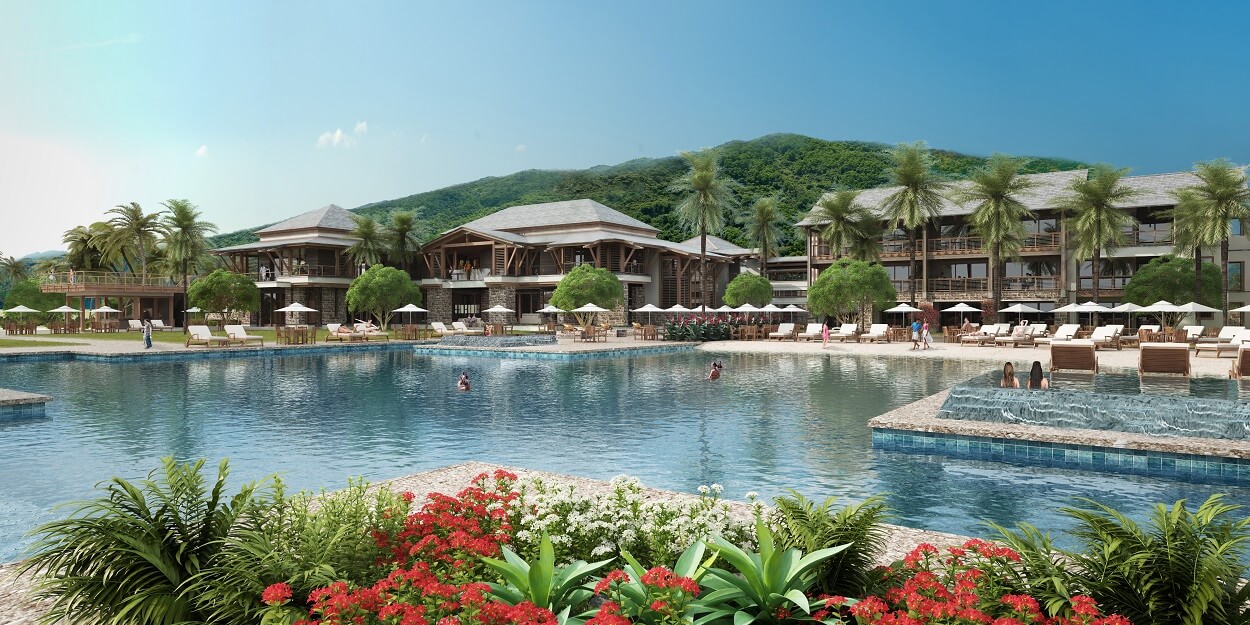
This is the flagship project of the program and its most storied history. Originally developed by Range Developments and launched under the Kempinski brand, the resort transitioned to InterContinental management in March 2023, bringing with it the full weight of the IHG brand's global distribution and loyalty network.
Located near Portsmouth and surrounded by Cabrits National Park, the resort features 151 rooms and suites, four outdoor pools, a large-format spa, gourmet dining, and over 8,500 square feet of meeting space. It was recognized by Condé Nast Traveler as one of the hottest new hotel openings at debut and has continued to perform well.
Secret Bay
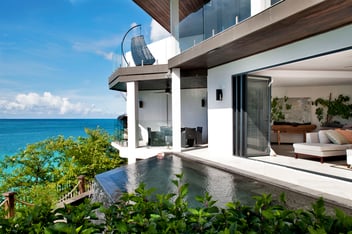
Secret Bay has earned a loyal reputation among ultra-luxury travelers and has consistently ranked among the world's best boutique resorts. Its six-star all-villa concept sits on a cliffside overlooking the Caribbean Sea, with each villa featuring a private plunge pool, a fully equipped gourmet kitchen, and direct access to a private cove.
For CBI investors, ownership in Secret Bay comes with inclusion in an exclusive luxury exchange club, allowing stays to be swapped with properties in other high-end destinations worldwide. It is a lifestyle-forward investment that appeals to investors who want more than a certificate.
Anichi Resort and Spa
Anichi Resort and Spa is a full-scale luxury development located on the northwest coast of Dominica near Picard. The resort combines branded hospitality with a comprehensive wellness offering, including a medical-grade spa component that has positioned it within the growing global medical tourism sector. Investors receive access to the property during their annual usage weeks.
Jungle Bay Resort and EcoVillas
Jungle Bay is built on a 20-acre plot overlooking Scott's Head and the Atlantic Ocean. Phase one of the project delivered 40 completed eco-villas, with the full development target of 120 units progressing through additional phases. Luxury Sea View Villas in this project start at $255,000, which includes all closing costs, transfer taxes, deed registration, and legal fees, making the all-in calculation more transparent than some alternatives.
The resort's eco-design philosophy aligns closely with Dominica's national identity as the "Nature Isle of the Caribbean," and its blend of adventure programming, spa facilities, and wellness-focused amenities has created strong appeal among the experiential travel market.
Tranquility Beach Resort
Affiliated with Hilton's Curio Collection, Tranquility Beach Resort brings the global recognition of the Hilton brand to a boutique setting along Dominica's west coast. The project is currently under construction, and CBI investors entering at this stage benefit from early-stage pricing. Hilton's brand affiliation provides confidence around management quality and international booking pipeline once operational.
Sanctuary Rainforest Eco Resort and Spa
Located within the boundaries of Morne Trois Pitons National Park, a UNESCO World Heritage Site, Sanctuary Rainforest Eco Resort and Spa offers investors something rare: citizenship through an asset embedded in one of the Caribbean's most protected natural environments. The project delivers 7-day high-season stays or 14-day low-season stays per year to investors, along with annual dividend income once the resort reaches operational maturity.
Ocean Edge Development
Ocean Edge presents a mixed-use opportunity in Castle Comfort, close to Roseau, the capital city. This development provides a different risk-return profile from the pure hospitality projects, with a blend of residential and commercial components that appeals to investors seeking broader diversification within the approved portfolio.
Grande Anse Holdings and Timbo's Downtown
Grande Anse Holdings and Timbo's Seaside Hotel Development round out the approved list. Timbo's, in particular, offers a boutique scale with 26 luxury rooms, an infinity pool, restaurant, spa, gymnasium, and a signature jetty extending into the Caribbean Sea. These smaller-scale projects carry lower entry points and provide meaningful diversity in the approved portfolio for investors who prefer a different asset profile.
Whatever your situation, book a completely free and confidential meeting today. High Net Worth Immigration brings 15+ years of experience helping clients secure second passports, residency, and cross-border asset protection.
The Full Cost Breakdown for 2026
Transparency matters when you are committing $200,000 or more to a citizenship application. Below is a complete breakdown of every fee category under the real estate pathway as of the Dominica CBI Regulations 2024, which came into effect on July 1, 2024.
| Fee Category | Amount (USD) |
|---|---|
| Real Estate Investment (Minimum) | $200,000 |
| Government Fees | |
| Single applicant | $75,000 |
| Main applicant plus up to 3 dependants | $100,000 |
| Each additional dependant under 18 | $25,000 |
| Each additional dependant aged 18 or over | $40,000 |
| Due Diligence Fees | |
| Main applicant | $7,500 |
| Spouse | $4,000 |
| Each dependant aged 16 and over | $4,000 |
| Processing and Administrative Fees | |
| Application processing fee | $1,000 |
| Certificate of Naturalization | $500 per person |
| Passport fee | $500 per applicant |
| Mandatory interview fee | $1,000 per applicant (16+) |
Inclusive of all fees when investing in a $200,000 qualifying property
Using a $200,000 property, depending on the ages of dependants
Payment Methods: USD, EUR, or GBP accepted. Currency equivalents must meet or exceed the USD amount at time of payment; shortfalls result in rejection. Bank transfer charges are the applicant's responsibility to ensure the government receives the full required sum.
Escrow Protection: Investment funds are held in an escrow account with the National Commercial Bank of Dominica throughout the process. The government manages and monitors this escrow arrangement to ensure funds are only released upon successful issuance of naturalization certificates. This structure provides meaningful protection for investors.
The Benefits That Drive Demand
Global Mobility with a Single Passport
A Dominican passport currently provides visa-free or visa-on-arrival access to over 140 destinations worldwide. This includes all Schengen Area countries, giving holders frictionless movement across 27 European nations, as well as Hong Kong, Singapore, and a broad range of other markets. Dominica is also one of only two Caribbean CBI countries (alongside Grenada) with visa-free access to China, which is a meaningful differentiator for investors with business interests across Asia.
It is worth noting that Dominican passport holders do not currently have visa-free access to the United Kingdom. However, US B-1 and B-2 tourist and business visas, once granted to Dominican citizens, remain valid for a period of ten years.
A Favorable Tax Environment
Dominica imposes no wealth tax, no gift tax, no inheritance tax, no foreign income tax, and no capital gains tax. For high net worth individuals structuring international wealth or succession plans, this creates a tax-efficient framework that complements rather than competes with existing planning structures.
No Residency Requirement
The entire application process can be completed remotely through a licensed Authorized Agent. There is no requirement to visit Dominica before, during, or after the process. Citizenship is granted permanently, and there is no minimum stay obligation to maintain it. Dominican citizenship is hereditary and can be passed to future generations.
Family Inclusion
The program is structured to accommodate multi-generational families. A single real estate investment qualifies the main applicant alongside a spouse, unmarried dependent children under 31 who are fully financially dependent, dependent parents, grandparents aged 65 or over, and unmarried siblings under 18. Dependants can also be added after the initial citizenship grant, making the program flexible for investors whose family circumstances evolve over time.
Property Usage Rights
Most approved real estate projects include a formal property usage arrangement. Investors in the InterContinental Cabrits receive two complimentary weeks per year. Jungle Bay and similar projects include seasonal stay allocations. Secret Bay investors gain access to a global luxury exchange club. These perks move the investment beyond a passive financial instrument and provide genuine lifestyle value.
Step-by-Step: How the Application Process Works
The application process is structured into clearly defined stages. Based on current processing benchmarks, the total timeline from initial submission to passport issuance runs between six and nine months.
Holding Period and Resale: What Investors Need to Know
The Dominican real estate investment must be held for a minimum of three years from the date citizenship is granted. After that period, the property can be sold freely on the open market with no impact on your citizenship status. This is the shortest mandatory holding period of any Caribbean CBI program and a meaningful differentiator when comparing Dominica to St. Kitts and Nevis, St. Lucia, or Grenada.
Important Nuance: If you choose to sell your investment to a buyer who is also seeking citizenship through investment in Dominica, the holding period extends to five years from the date your citizenship was granted. This is not a restriction on selling generally, only on selling to another CBI applicant within the first five years.
The secondary resale market is predominantly limited to other CBI buyers, which investors should factor into liquidity planning. However, as the overall program matures and Dominica's tourism sector grows with the upcoming international airport, organic demand for resort-linked properties is expected to broaden.
Real Estate vs. EDF Donation: Which Route Makes Sense?
The Economic Diversification Fund (EDF) contribution is non-refundable and provides no asset in return. A single applicant pays $200,000 to the fund and receives citizenship. The total all-in cost runs approximately $210,000 to $215,000 for a single applicant, making it cheaper on paper than the real estate route.
The real estate pathway costs more upfront, roughly $285,000 to $290,000 for a single applicant, but the core investment is recoverable. After three years, the investor sells the asset and recoups the $200,000 (plus or minus market performance and transaction costs). The net cost of citizenship through real estate, after asset recovery, can be significantly lower than the EDF donation for investors who hold and sell at or above their purchase price.
For high net worth investors who value capital efficiency and want a meaningful asset on their balance sheet rather than a donation receipt, the real estate route is the more sophisticated choice. It also carries the practical benefit of annual property usage rights and, in some cases, meaningful dividend or rental income during the holding period.
Eligibility Requirements
To qualify for Dominica's CBI program through the real estate route, applicants must meet the following criteria:
- ✓
Age Requirement They must be at least 18 years of age.
- ✓
Clean Criminal Record They must hold a clean criminal record with no convictions for serious offenses.
- ✓
Good Health They must demonstrate good health and submit a medical certificate as part of the application.
- ✓
Lawful Source of Funds They must prove that the source of investment funds is fully lawful and traceable.
- ✓
No Restricted Jurisdiction They must not hold citizenship from a jurisdiction that has been restricted by the Dominican government, as certain nationalities face additional due diligence requirements or enhanced screening fees.
Dominica does not impose dual citizenship restrictions. Investors are free to retain their existing citizenship alongside Dominican citizenship.
The 2027 Airport: Why Timing Matters for Real Estate Investors
One of the most consequential infrastructure developments in Dominica's modern history is the construction of a new international airport, scheduled to open in 2027. Currently, access to Dominica requires a connecting flight through Barbados, Antigua, or other regional hubs, limiting direct arrivals and constraining the volume of long-stay visitors the island can attract.
50% projected increase in visitor arrivals
When the airport opens, direct international flights will become possible for the first time. Tourism projections associated with the airport opening forecast up to a 50% increase in visitor arrivals, with the most significant impact expected on extended-stay tourists rather than cruise passengers. For real estate investors in the island's luxury resort sector, this represents a meaningful tailwind for occupancy rates, rental yield performance, and underlying property values.
Investors entering the approved real estate projects today are positioned to benefit from this infrastructure-driven demand uplift during their mandatory holding period and beyond.
Frequently Asked Questions
Yes. Unmarried children up to the age of 31 who are fully financially dependent on the main applicant qualify as dependants under the program.
No. There is no residency or travel requirement to Dominica before or after citizenship is granted. The entire process can be managed remotely.
Ten years, with unlimited renewals thereafter.
Yes. Dominican citizenship is hereditary and can be passed to children born after the citizenship grant.
The Dominican government reviews eligibility on a case-by-case basis and updates its restricted or enhanced due diligence list periodically. Iranian nationals, for example, face significantly higher due diligence fees ($15,000 for the main applicant, $10,000 per dependant). Prospective applicants from jurisdictions with elevated risk profiles should confirm eligibility with an Authorized Agent before proceeding.
Citizenship is issued upon successful completion of the investment and government process. It is not contingent on the ongoing operational success of the underlying real estate project. However, investors should conduct thorough due diligence on their chosen development before committing.
Yes. The entire process is designed to be completed remotely through a licensed Authorized Agent.

Vicky Katsarova is an internationally recognized advisor in residency and citizenship by investment, with more than 15 years of experience helping investors, entrepreneurs, and families secure strategic residency and citizenship solutions.
Since founding High Net Worth Immigration in 2010, she has advised clients across more than 20 jurisdictions, helping them enhance global mobility, protect family wealth, diversify geopolitical risk, and unlock international opportunities through carefully selected investment migration programs.
Having lived in Bulgaria, the UAE, and Canada, Vicky combines professional expertise with personal international experience. Her boutique advisory is built on discretion, integrity, and long-term client relationships, delivering tailored solutions aligned with each client’s unique objectives.
Member of the Uglobal Writers Council | Contributor to UNIQUE Private Jet Magazine | Featured in CIVITAS POST's “Leading Women” & Women's Journal