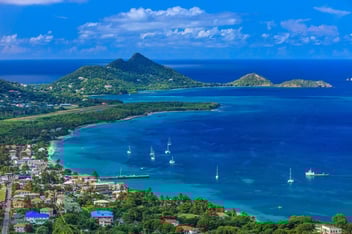
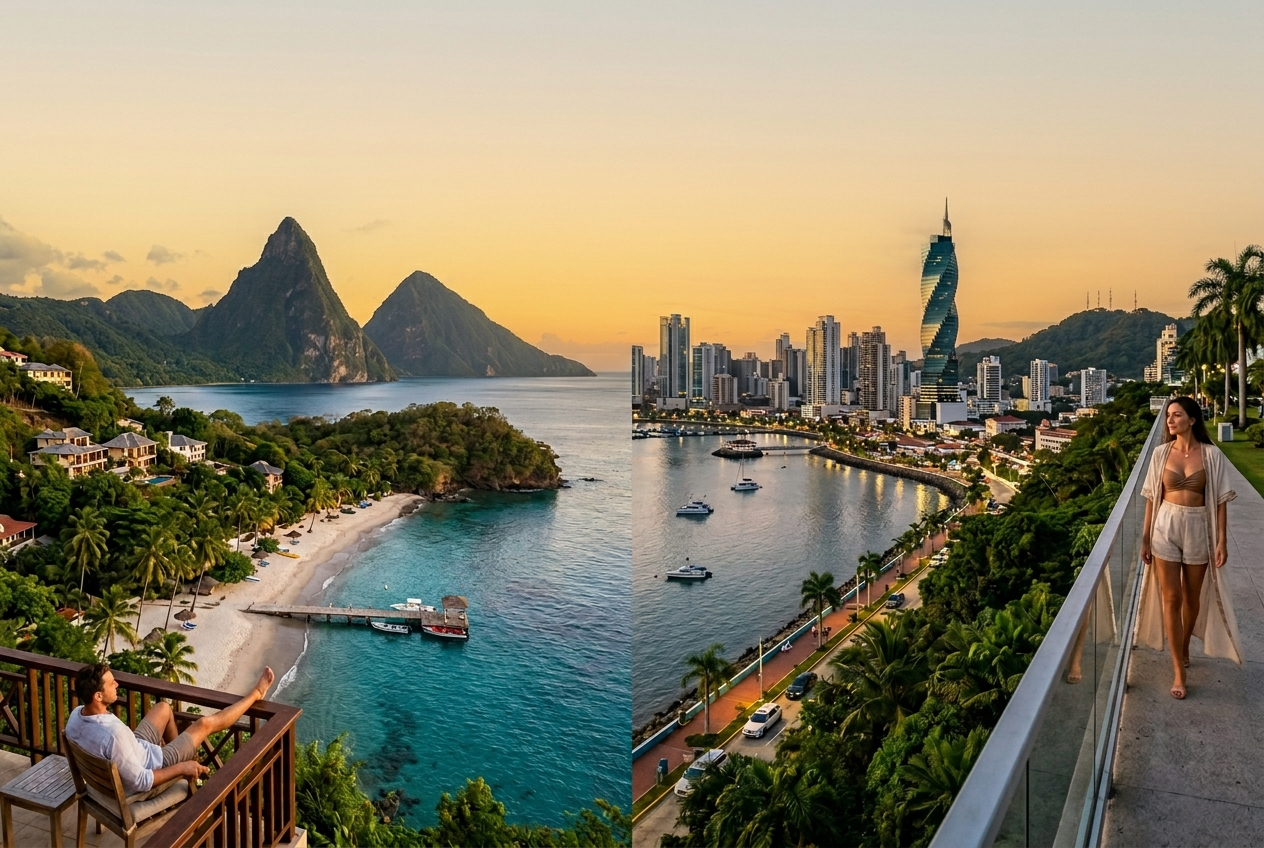
For high-net-worth individuals (HNWI) planning their international residency strategy, two options come up repeatedly: Caribbean Citizenship by Investment programs and Panama's investment residency pathways. Both are legitimate routes with real advantages. But they're built for different objectives, and choosing between them without understanding that distinction is one of the most common mistakes investors make.
The right choice depends on whether you're prioritizing a passport, banking access, tax efficiency, business infrastructure, or long-term relocation. Read on to find out which option fits your profile.
Difference Between Panama Residency and Caribbean Citizenship
Before comparing these options, it's worth being clear on what each one actually delivers because they're not interchangeable.
Panama: Permanent Residency
The Panama Qualified Investor Visa (QIV) grants immediate permanent residency rather than citizenship. There is no provisional stage. Investors gain the legal right to live, bank, and operate in Panama from the moment their application is approved. You may apply for citizenship after five years of maintained residency, subject to meeting additional legal requirements.
Caribbean CBI: Direct Citizenship
Programs in St. Kitts & Nevis, Antigua & Barbuda, Dominica, Grenada, and St. Lucia offer direct citizenship through a qualifying investment or government donation, typically processed within three to six months. These programs provide a second passport with visa-free or visa-on-arrival access to various destinations across the world, without requiring relocation.
Why Many HNWIs Are Choosing Panama in 2026
So, what are the reasons why Panama has an upper hand over other programs? Let's take a closer look at a few of them in detail.
Hint: It's not about one program being better than another. Most of the time, it comes down to your goals, what you want to gain from acquiring residency or a second passport, and which program offers conditions that are better aligned with your lifestyle, business ambitions, wealth optimization strategies, and family needs.
Banking, Tax, and Economic Fundamentals
Panama operates as a fully dollarized economy, which eliminates currency risk for dollar-denominated investors. Under its territorial tax system, income earned outside Panama is completely exempt from Panamanian taxation. For entrepreneurs with international income streams, that's a structurally significant advantage.
Panama's GDP growth averaged approximately 5.6% between 2010 and 2025, making it one of the fastest-growing economies in the Americas. The Panama Canal handles roughly 6% of global maritime trade, reinforcing the country's position as a critical global logistics and financial hub.
Investment Routes
The QIV offers three qualifying investment options, each requiring a minimum five-year hold:
Hotel co-ownership, branded executive suites from $306,652, or luxury apartments from $350,000 with target returns of 3 to 6% annually
Qualifying listed securities on the Panama Stock Exchange
Fixed-term deposit at a licensed Panamanian bank
More Than a Passport Strategy
International business setup, private banking relationships, family office structures, and asset protection frameworks are all well-developed here. For investors thinking about where their wealth will be held and structured, Panama offers substance that Caribbean island programs cannot always replicate.
Panama QIV vs Caribbean CBIs: Head-to-head Comparison
| Feature | Panama QIV | Caribbean CBIs |
|---|---|---|
| Type | Permanent residency | Direct Citizenship |
| Min. investment | From US$300,000 (real estate) | From US$200,000 (Dominica) |
| Processing speed | About 30 business days | Usually 3–9 months, depending on jurisdiction |
| Investment hold | Typically 5 years | Donation: non-refundable; real estate: usually 3–7 years |
| Banking environment | Strong international banking center | Generally, more limited offshore banking ecosystems |
| Tax system | Territorial taxation (foreign-source income generally tax-free) | Most programs are low/no-tax jurisdictions |
| USD economy | Yes, fully dollarized | Mostly no; many use the Eastern Caribbean Dollar (XCD) |
| Physical presence | Minimal; periodic visits are usually required every 2 years | Usually, none or extremely limited |
| Path to citizenship | Possible after 5 years of residency and naturalization eligibility | Immediate citizenship upon approval |
| Best for | Banking access, tax planning, and long-term residency strategy | Mobility, second passport diversification |
2026 Caribbean CBI Investment Minimums
The table below summarizes the current minimum donation and real estate investment requirements across the five major Caribbean CBI programs.
| Program | Donation minimum | Real estate minimum |
|---|---|---|
| Dominica | $200,000 | $200,000 |
| Antigua & Barbuda | $230,000 | $300,000 |
| Grenada | $235,000 | $270,000 |
| St. Lucia | $240,000 | $300,000 |
| St. Kitts & Nevis | $250,000 | $325,000 |
Note: All figures are 2026 minimum investment amounts, excluding government, legal, and due diligence fees.
When a Caribbean Passport Still Makes More Sense?
Caribbean CBI programs have clear advantages for specific profiles. They're worth considering when:
- ◆
Speed is the priority. A second passport within three to six months is only achievable through a Caribbean program.
- ◆
Visa-free travel is the main goal. St. Kitts & Nevis, for example, offers access to 157 destinations. Caribbean passports often include the Schengen Area and the UK.
- ◆
U.S. access matters. Grenada is the only Caribbean CBI country with a bilateral E-2 investor visa treaty with the United States, giving Grenadian citizens a viable pathway to live and work in the U.S. through a qualifying business investment.
- ◆
Lower capital commitment. Donation-based citizenship starts at $200,000 in Dominica, making Caribbean programs more accessible for some investors.
Which Option is Right for You in 2026?
When it comes to choosing the perfect program, there's no single answer. The right choice depends on your specific circumstances. Here's a quick guide by profile:
The banking infrastructure, territorial tax system, and Latin American business connectivity make it a stronger operational base.
Time to full-fledged citizenship rather quickly.
The E-2 treaty is a unique advantage that no other Caribbean program offers.
The substance of the jurisdiction, its professional services, and its family-inclusive residency structure make it a more credible long-term base.
Private foundations, holding companies, and asset protection frameworks are well-developed here and unavailable through Caribbean citizenship programs.
FAQs
No. Panama offers residency by investment, not direct citizenship. The Qualified Investor Visa grants immediate permanent residency, with citizenship possible after five years of maintained residency and meeting legal requirements.
Yes, potentially. Investors who maintain their permanent residency may become eligible to apply for Panamanian citizenship after approximately five years, subject to additional legal criteria.
It depends on your goals. Caribbean programs are better suited to investors who need a passport quickly or want expanded travel access. Panama is the stronger choice for banking, tax planning, business infrastructure, and long-term relocation.
Yes. Panama uses a territorial tax system, meaning income earned outside Panama is not subject to Panamanian taxation.
St. Kitts & Nevis leads on visa-free access at 157 destinations. Grenada is uniquely valuable for investors seeking U.S. access through the E-2 visa. Antigua & Barbuda and St. Lucia are solid mid-range options, while Dominica offers the lowest entry point at $200,000.
Yes, and many investors do. Panama provides the financial and business foundation, while a Caribbean passport adds travel flexibility and a second nationality. The two strategies complement each other well within a broader international mobility plan.
Explore Your Options Today
Residency and citizenship planning should align with your tax strategy, business goals, family priorities, and long-term global mobility objectives. At High Net Worth Immigration, we work with globally mobile investors to design strategies that reflect their full international picture.
Whether you are considering Panama's Qualified Investor Visa, a Caribbean citizenship program, or another Citizenship by Investment (CBI) option, we can help you identify the solution that best aligns with your goals, lifestyle, and long-term plans.